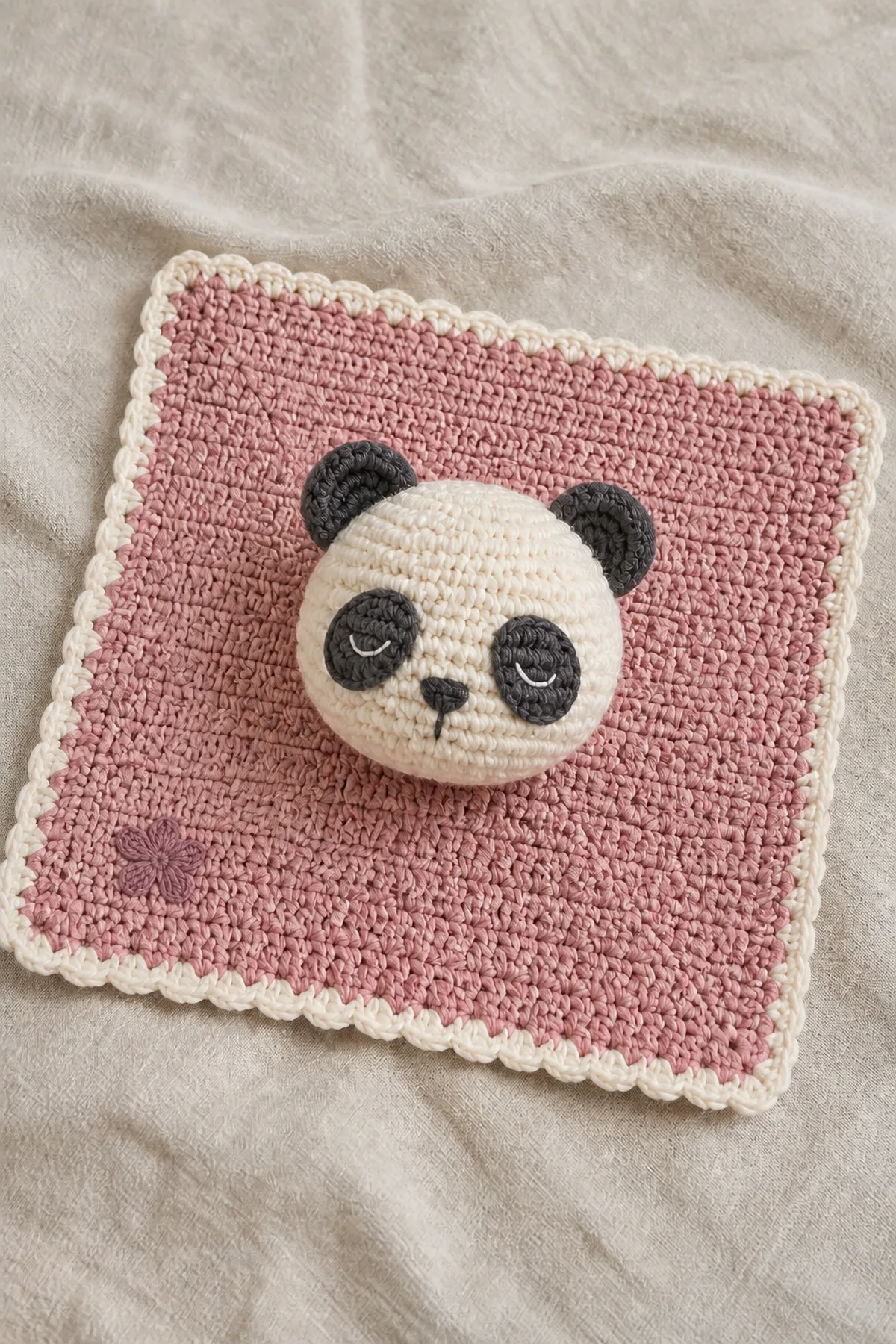
This original BabyYarnie petunia the panda lovey is designed independently as a practical crochet baby project with explicit stitch counts, measured checkpoints, and clear finishing. The instructions use US terms and keep every construction decision visible so the finished piece can be checked before use or gifting.
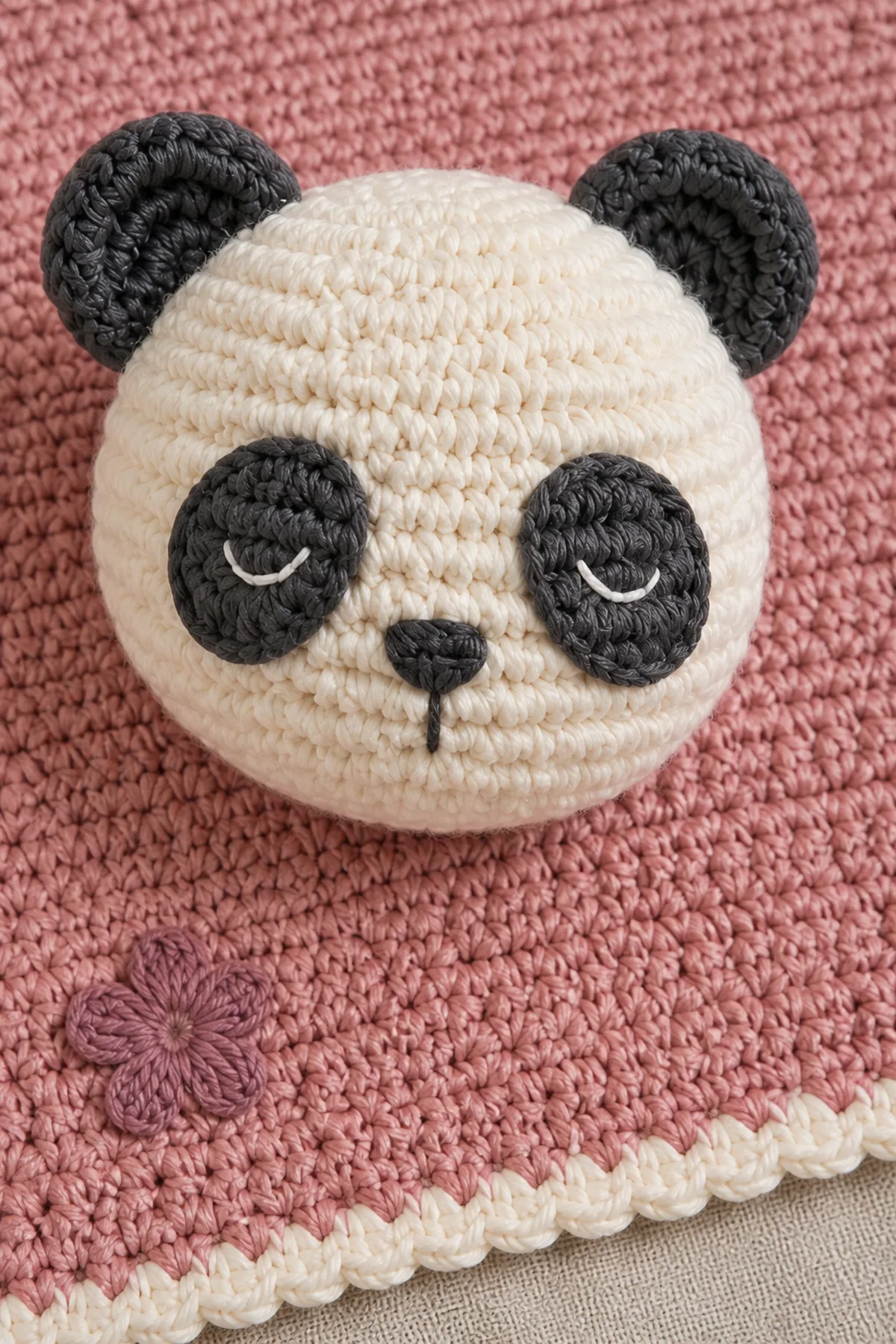
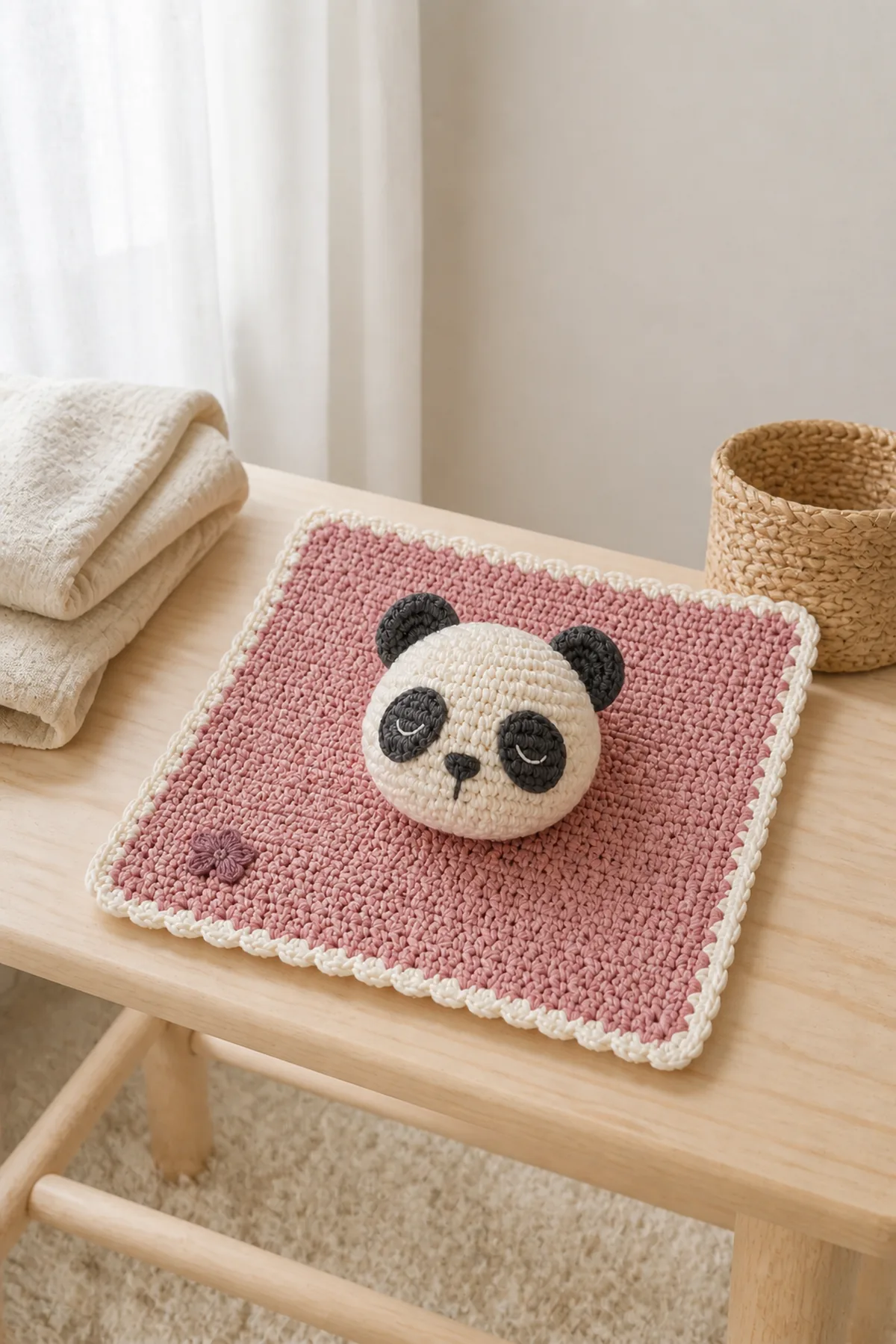
The dusty-rose square is worked in counted rows and edged in cream. A cream panda head receives two rounded charcoal ears and two completely flat eye patches before embroidery; one tiny five-petal petunia is stitched directly into a corner without beads or a detachable center.
Pattern Details
- Hook Size: 3.5 mm
- Finished Size: Approximately 12-inch square excluding the centered head
- Gauge: 14 sc and 16 rows = 4 inches
- Terminology: US
- Estimated Time: 5–7 hours
- Construction: A 42-stitch comfort square with a separately crocheted and securely sewn center detail.
- Skill level: Easy
Why You’ll Love This Project
The construction is repetitive enough for a relaxed crochet session while the measured checkpoints help prevent size drift. A washable, smooth yarn keeps the stitches easy to inspect and gives the finished baby project a soft, tidy appearance.
Materials
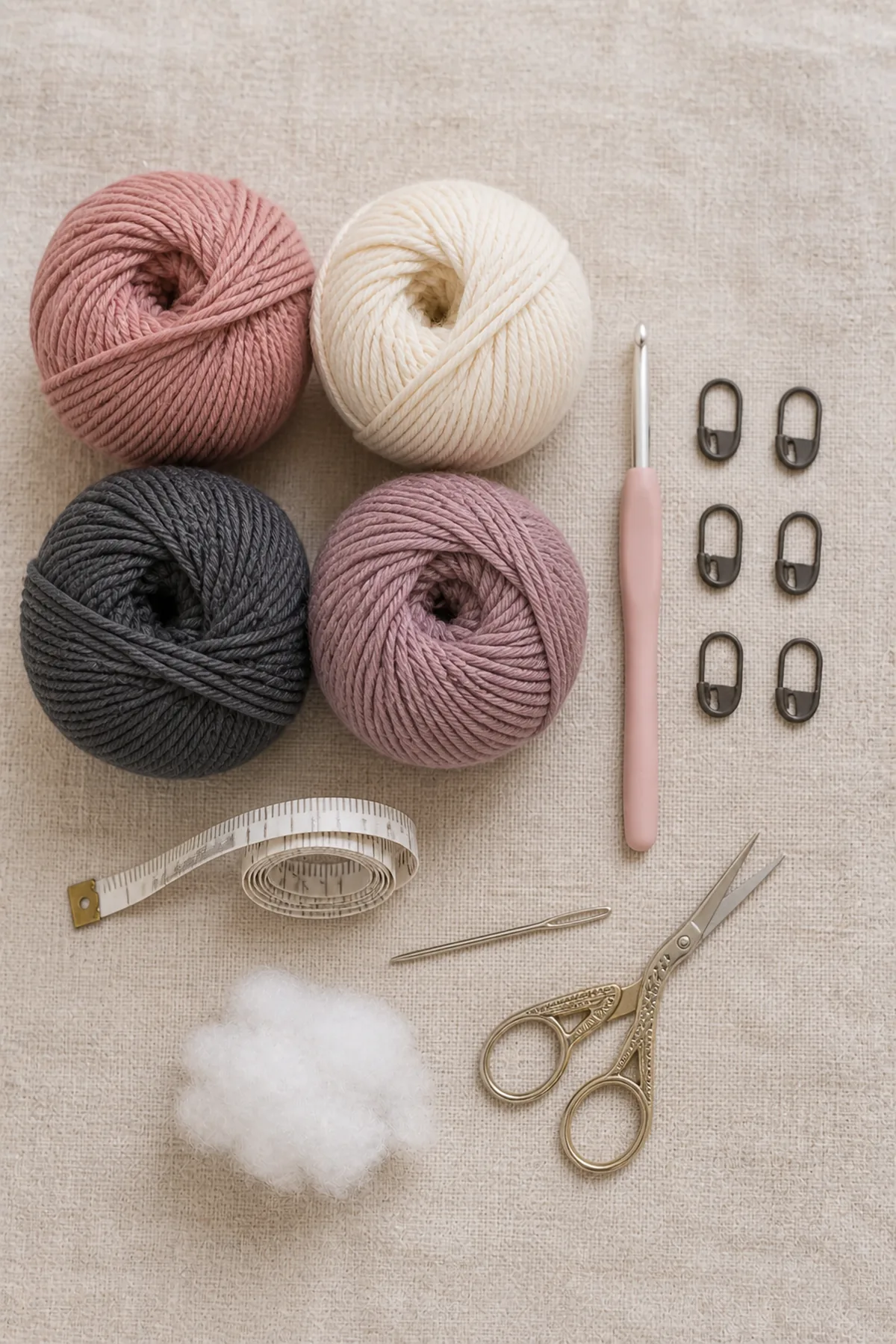
- Approximately 260 yards soft washable DK yarn in dusty rose
- Approximately 130 yards DK yarn in cream
- Approximately 55 yards DK yarn in charcoal
- Small amount of mauve yarn for the petunia embroidery
- 3.5 mm crochet hook
- Washable toy stuffing for the panda head
- Six locking stitch markers
- Yarn needle
- Scissors
Gauge, Measurements, and Planning
The 42-stitch square should measure about 12 inches after washing. Keep the fabric dense enough that any stuffing cannot migrate through the stitches.
Make and wash a gauge swatch before beginning. Measure only after the swatch is completely dry. If the stitch width differs, change hook size rather than pulling the working yarn tighter. Keep a written count at the end of every section so the finished edges remain balanced and the assembly points line up.
Abbreviations and Special Stitches
- ch: chain
- sc: single crochet
- hdc: half double crochet
- sl st: slip stitch
- st(s): stitch(es)
- rnd: round
Special stitch guidance: Flat petunia embroidery: work five short mauve petals radiating from one tightly couched yarn center, secure each petal directly to the crochet fabric, and hide all ends on the wrong side.
Important Notes
- Use smooth, washable yarn that is appropriate for sensitive skin and check the care label before gifting.
- Beginning chains do not count as stitches unless a step explicitly says that they do.
- Count every row or round and move the first-stitch marker before continuing.
- Avoid loose buttons, beads, long ties, or unsecured embellishments on items intended for babies.
- Crocheted items are not a substitute for current safe-sleep guidance; supervise use whenever the project type requires it.
Complete Instructions for Petunia The Panda Lovey
Crochet the Comfort Square
Turn after every row and keep both edges straight.
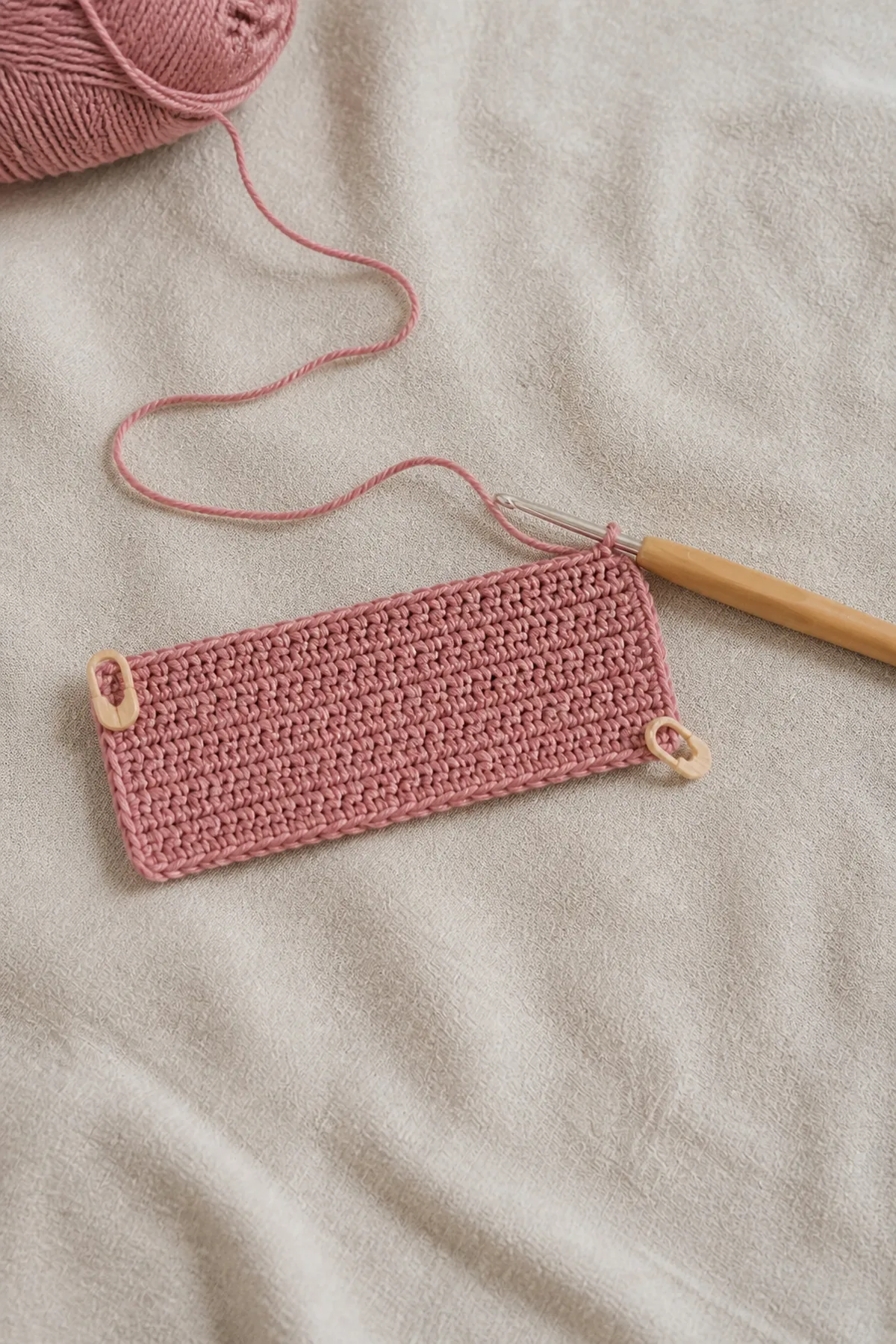
- Foundation Row: Ch 43. Sc in the second chain and in every chain across. Turn. (42 sts)
- Square Row 2: Ch 1, sc in every stitch across. Turn. (42 sts)
- Square Rows 3–48: Repeat Square Row 2, then measure and block to a 12-inch square. (42 sts)
Make Petunia the Panda and Her Flat Flower
Keep both eye patches and the petunia completely flat against the crochet surface.
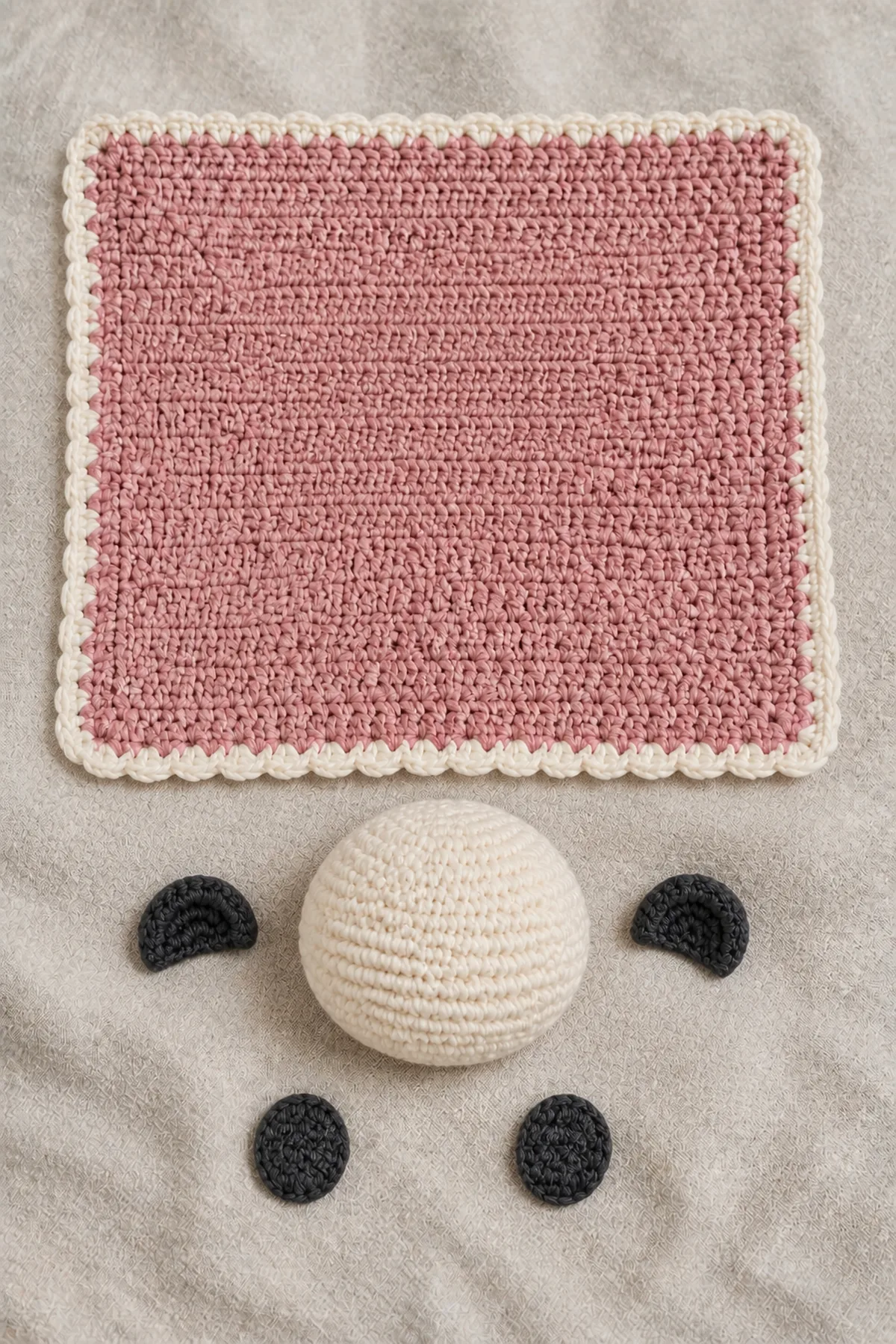
- Crochet a dense cream sphere for the panda head, stuff lightly, and close the opening completely.
- Make two rounded charcoal ears and two small oval charcoal eye patches; sew around every complete edge with matching yarn.
- Embroider closed cream-highlighted eyes and a small charcoal yarn nose, hiding all ends inside the head.
- Center and twice-sew the head to the square, then embroider one tiny five-petal mauve petunia directly into a lower corner.
Assembly and Shaping
Sew the charcoal eye patches completely flat before embroidering the closed eyes. Secure both rounded ears through both layers, attach the panda head to the square in two full passes, and embroider the small petunia directly into one lower corner.
Lay every component on a flat surface before joining. Match the marked centers first, then divide each remaining edge into equal sections. Work through both layers with consistent tension and pause after each section to check that the fabric lies flat. This measured approach prevents twisting and keeps decorative details facing the intended direction.
Finishing
- Weave every yarn tail through several same-color stitches, reverse direction once, and trim only after a gentle stretch test.
- Wash or damp-block according to the yarn label, shape to the listed measurements, and allow the piece to dry completely.
- Inspect seams, edges, attachments, and surface details from both sides; repair any loose area before use or gifting.
- Attach a care note with the fiber content, washing method, finished measurements, and supervision guidance.
For a polished result, weave each tail through several same-color stitches, reverse direction once, and trim only after the fabric has been gently stretched. Block to the listed dimensions without flattening textured stitches. Inspect joins, borders, straps, and decorative pieces before the project is used or gifted.
Helpful Tips
- Make and wash a gauge swatch because baby sizing changes quickly when yarn relaxes.
- Use locking markers at shaping points and record the count after each completed section.
- Choose high-contrast marker colors so no marker is accidentally left in the finished project.
- When substituting yarn, match the washed gauge and fabric feel rather than relying on the weight label alone.
Good lighting and a contrasting stitch marker make counting much easier. If a section looks uneven, compare the current count with the previous checkpoint before continuing. Fixing one missed stitch early is faster than compensating later, and it preserves the measurements used by the assembly instructions.
Frequently Asked Questions
Which yarn is best for a baby crochet project?
Choose a smooth, washable yarn with a soft hand and a clear care label. Avoid fibers that shed heavily or create a scratchy fabric.
Can I change the finished size?
Yes, but make a washed swatch first and change repeat counts symmetrically. Record the new measurements and recheck every shaping or assembly point.
How do I make the finish safer for gifting?
Secure every tail and seam, omit loose decorations and long cords, and include care and supervision information appropriate to the finished item.
Conclusion
Petunia the Panda lovey combines a dusty-rose square with unmistakable flat panda markings and one tiny anchored flower. Reinforced ears, embroidered eyes, and a twice-sewn head base complete this original BabyYarnie character.
BabyYarnie Printable Crochet Pattern Card
BabyYarnie — easy-to-follow baby crochet for everyday makers.
Project: Petunia The Panda Lovey
Skill level: Easy Hook: 3.5 mm Yarn: DK
Finished size: Approximately 12-inch square excluding the centered head
Card Materials
- Approximately 260 yards soft washable DK yarn in dusty rose
- Approximately 130 yards DK yarn in cream
- Approximately 55 yards DK yarn in charcoal
- Small amount of mauve yarn for the petunia embroidery
- 3.5 mm crochet hook
- Washable toy stuffing for the panda head
- Six locking stitch markers
- Yarn needle
- Scissors
Card Instructions
- Crochet the Comfort Square: Work a 42-stitch single-crochet square for 48 rows.
- Make Petunia the Panda and Her Flat Flower: Build Petunia’s cream-and-charcoal panda head, secure every flat marking, and add one anchored floral motif.
Finish: Check every count, weave in all ends, block to measurement, and inspect each join.